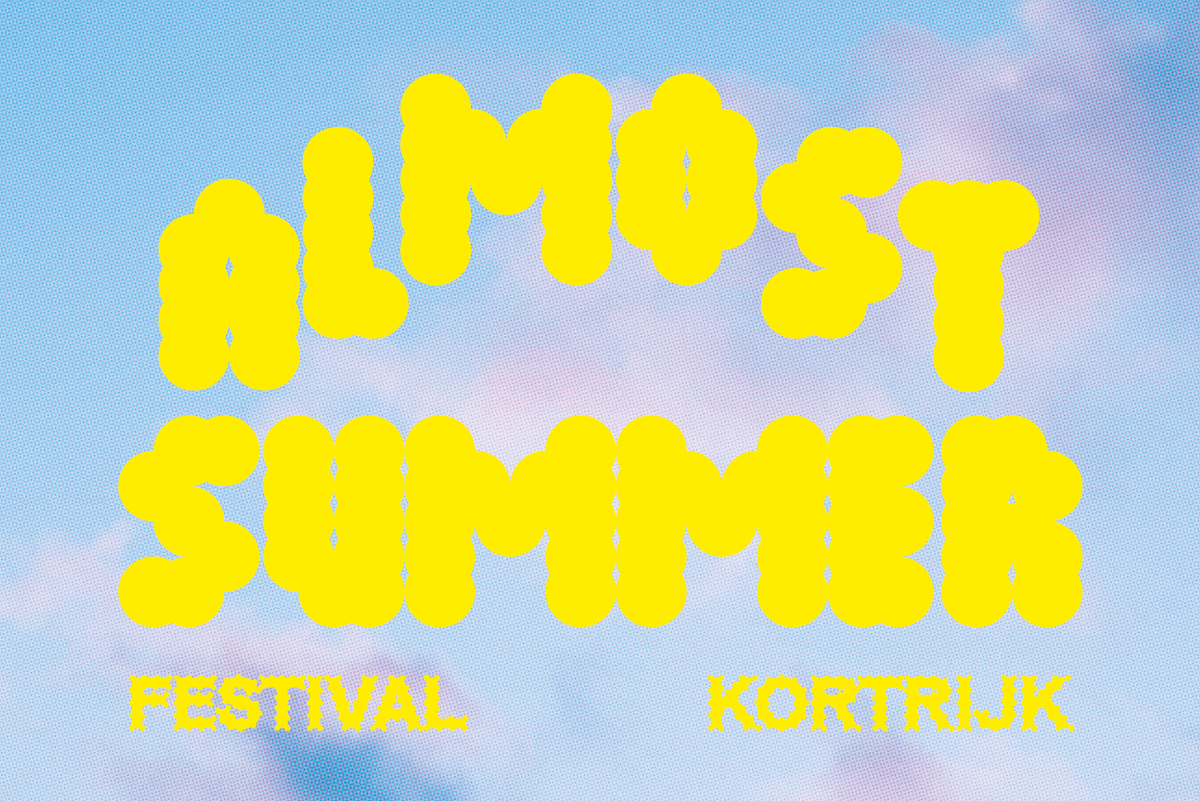
ALMOST SUMMER: 10 – 20.06.2026

Ten days packed with unexpected and daring dance and performance, featuring work by Calixto Neto, Elena Carvajal, Rémy Héritier, Nada Gambier and many others. Discover it from 10 to 20 June during a new edition of the Almost Summer Festival!

The eighth edition of Almost Summer revolves around (in)visibility. The artists shed light on what is deliberately kept out of sight. The extra who never gets a name. The body that doesn’t fit into the story. The language that is barred from the stage. The ritual that was suppressed by the coloniser and yet continued to exist.

Discover the full programme!

Discover the 15 laureates of EMERGE!

EMERGE is a platform for cultural and artistic cooperation built with financial support from the Interreg VI France-Wallonie-Flanders programme amounting to €3.29 million. The project has since launched a call to the artistic field and is now happy to announce the selection of 15 companies.

Given the impressive number of applications (no fewer than 136 files were received), EMERGE has decided to accompany 15 companies instead of the planned 12. This only confirms the richness and strength of the cross-border cultural landscape.

These are all the laureates

Hauts-de-France

Dans le ventre – Rébecca Chaillon
Interscribo – Tatiana Julien
La drache – Juliette Chevalier
La Phenomena – Maëlle Dequiedt & Simon Hatab
Zone – poème – – Mélodie Lasselin & Simon Capelle

Flanders

Carolina Mendonça
Maxim Storms
Nada & Co. – Nada Gambier
Pianofabriek – Milø Slayers
Side-Show – Aline Breucker & Quintijn Ketels

Wallonia

Ad Lib – Yasmine Yahiatène
DEMESTRI + LEFEUVRE – Florencia Demestri & Samuel Lefeuvre
Niska – Hélène Collin
Present Perfect asbl – Jorge León
Sophie Guisset

Until 2028, each laureate will receive both financial support and tailor-made guidance. The project partners pool their resources and expertise to support the production, dissemination and export of the laureates’ work. EMERGE thus aims to be a lever for artistic daring and excellence while also putting the creations on the European and international map.

The 15 companies will soon start their EMERGE projects. Many residencies, workshops and meetings are planned in the coming months. These activities immediately strengthen and stimulate cooperation and exchange between the various cultural players in the three regions.


Partners
Hauts-de-France: le Phénix scène nationale Valenciennes – Pôle européen de création (lead partner) / la Maison de la Culture d’Amiens – Pôle européen de création et de production – scène nationale / Le Manège Maubeuge, scène nationale transfrontalière / La rose des vents, scène nationale Lille métropole Villeneuve d’Ascq / le Théâtre du Beauvaisis – scène nationale
Flanders: Viernulvier (Vooruit) – Gent / BUDA kunstencentrum – Kortrijk / Cultuurhuis De Grote Post – Oostende
Wallonia: Charleroi danse – Centre chorégraphique de la Fédération Wallonie-Bruxelles / le Théâtre de Namur

Expertises
ONDA – office national de diffusion artistique / l’Institut Français / Kunstenpunt

Writing competition on climate racism

Novice writers beware! Do you agree that too little attention has been paid to the link between the climate crisis and structural racism? After all, racism and the ecological crisis share a common cause: a (neo)colonial capitalist system that exploits both people and the planet for profit, or as Jamaican-British activist Mikaela Loach writes: “Climate justice shows us that addressing the climate crisis can liberate us all.”

Oikos and Kif Kif are organising a writing competition on the theme of climate racism. So do you have an idea for a blazing opinion piece, or would you rather express your thoughts in a poem or short story? Then submit your text before 18 August! On 28 September, the winners will be announced at the Ecopolis festival in Kortrijk. They will receive a cash prize of 250 euro. The three winning texts will also be published in Oikos magazine and on the Kif Kif platform.

aids assembly

Assembly: How Is This Remembered?

When, where, and what is this assembly?

Are we connected by HIV & aids?

From July 13 to 18, 2024 at BUDA Kunstencentrum in Kortrijk, “Aids, archives, and arts assemblies in Belgium” will host an assembly to practice spoken word as an archival tool between 13 people concerned with HIV & aids and impacted by serophobia.

We will gather around the question “How is this remembered?” which was coined in response to this project by London writer Juliet Jacques. Taking part in queer and feminist traditions of oral cultures, we will tell each other our present and future stories of aids, which aren’t stable but rest in transition. We invite you, with us, to recount stories intimately, in the absence of any other audience or documentation, contrasting with contemporary Western arts politics of queer visibility.

Who is this assembly for? And how will we be hosted?

Presence is reserved to transfagbidyke-queer people and cis straight women. Out of the 13 spots in the assembly, eight are still available. Most spots are reserved in priority for HIV+ people. Attending to some of the intersections of struggles around HIV & aids, additional spots are reserved in priority for BIPOC, trans people, and lesbians.

Each person will be accommodated in an individual room. They will receive 200 EUR to cover their presence and reimburse their travel costs. Ingredients for cooking will be paid separately by the project.

We will use English in group activities and translate in between us into other languages when needed and possible. The meeting room, its toilets, and some bedrooms are wheelchair accessible, but access to the bathroom and toilet in the accommodation requires assistance.

What is in the programme?

People present are invited to collaborate in two group activities: self-organization and a daily spoken recap. The self-organization includes cooking, cleaning, scheduling our program, hosting group conversations, and overall getting organized between us. Each evening, during the spoken recap, one person will recount their story of the day, sharing with the group in about ten minutes how they remember their latest 24 hours.

There will be regular optional workshops throughout the assembly: on storytelling with nixie; on mass media HIV & aids representations with Roberto Tovar, founder of Número de Serie; and on canal boating with Castillo.

People present can join all activities or just some.

Who is the host?

“Aids, archives, and arts assemblies in Belgium” is the project to host two intimate assemblies in 2023 and ’24, self-organized between people concerned with HIV & aids and impacted by serophobia, as well as events with different audiences. It aims at devising processes to carry out projects on aids, archives, and arts made by and for people concerned with HIV & aids. We, Castillo, Emmanuel Cortés, and Talya, direct this project from our HIV+, transfagbidyke-queer, feminist, antiracist, materialist, harm reductionist, and intersectional community health political agendas. The project is coproduced with La Bellone, BUDA Kunstencentrum, Le Delta, erg: école de recherche graphique, Flanders Arts Institute, Kaaitheater, Nadine vzw, Sint Lucas Antwerpen, and Viernulvier, all of them in Belgium.

You can read about some of our 2023 activities here.

How to join?

Send an email by June 15 to kortrijkassembly2024@proton.me answering to these questions:

1) What name and pronouns do you want to use in our correspondence?

2) The assembly will run from July 13 to 18. We encourage you to be present for as many days as possible to share time together and build connections. We think that four or more days would be ideal. Nevertheless, we understand how differently we are available and can engage to be present. On which dates would you join the assembly?

3) We understand that being concerned with HIV & aids and impacted by serophobia involves a multiplicity of experiences, lived by HIV+ and HIV- people. Those experiences are marked by the biopolitics of aids, which are paired with homophobia, misogyny, transphobia, racism, colonialism, classism, sex-work-phobia… Presence in the assembly is reserved to transfagbidyke-queer people and cis straight women, concerned with HIV & aids and impacted by serophobia. Are you part of this group? Yes/No

4) We plan to gather an assembly composed by, including organizers, at least two thirds of HIV+ people. Because it is harder for HIV+ people to access arts institutions, we are reserving at least five spots in priority for HIV+ people. Would you like to apply within this priority? (This information will only be used to allocate rooms. Your email will be read by a HIV+ member of our team and will be discarded after the reservations are finished.) Yes/No

5) We know that HIV & aids are spaces of intersections of struggles. Attending to some of those intersections, we are reserving at least two more spots in priority for BIPOC, trans people, and lesbians. Would you like to apply within this priority? (This information will only be used to allocate rooms. Your email will be discarded after the reservations are finished.) Yes/No

6) Is there anything else you would want us to know concerning your participation?

We will respond to everyone by June 20 and continue conversations with the selected participants to organize their arrivals. We will also establish a waiting list.

If you have other questions before applying, you can email viralmail@proton.me.

Sara Manente

A conversation with Sara Manente

2024

Sara Manente brings a whole new interpretation to our feminist school with her White Garden at Budatoren. Mathilde Villeneuve asked her about her past work and the philosophy behind White Garden.

Can you elaborate on the development of your research based on fermentation?

For the past six years, the central focus of my artistic practice has been the link between live art and living cultures. I started with research called ‘Wicked technologies / Wild fermentation’ based on three main pillars: to explore more deeply what ecofeminist theories are; to learn different fermentation techniques; and to continue my dance practice in parallel with some musical experimentations. I was interested in female scientists, who think at a microbiological level about how bodies are formed and how they relate. I have to add that I was pregnant at that time, experiencing a visceral and estranging physical transformation, and I wanted to learn from this situation and from my home, where I spent much more time than before. In queer phenomenology, the English-Australian feminist scholar Sara Ahmed pays attention to the table where writing happens. In my case the table was my kitchen table.

How would you define ecofeminism?

I am not an expert, nor an academic. I usually don’t flag feminism when it comes up in my work, because I am too afraid of abusing it and making a label out of it. But I would say that ecofeminism* is a way to consider that we are ‘in’ an ecosystem and we ‘are’ an ecosystem at the same time.

I came across many different authors and theories relating, for instance, bacteria and the market, or gut-depression and feminism, or politics and compost. I am very interested in the American microbiologist Lynn Margulis, who questioned the way Darwinism was later reduced to the idea of ‘the survival of the fittest’, based on the concept of a linear and competitive evolution of the species, with branches that let only the best and most aggressive ones survive. On the contrary, Margulis made the case for a symbiotic vision, stressing the importance of cooperative relationships between species and organisms of different kingdoms.

Ecofeminism, anthropology and science (especially microbiology) help us to consider not only women, but all of humankind in relation to other species. They question our vision of female/male, reproduction, competition, distinction between individuals and species. They basically question the idea of the individual self, because an individual is never completely alone and autonomous. Ecofeminism forces us to focus more on the relation with the environment and other species, than on the individual per se.

How did you get from this research to ROT?

At that time (2019), I was doing research at a.pass (advanced performance and scenography studies) in Brussels and in residency at Constant vzw and some other art institutions like BUDA. After two years, as part of the Cycle 1/a.pass Research Center, it was proposed that I create a publication, thinking in terms of ‘performative publishing’. ‘Public’ means audience but also ‘public sphere’, considering publishing a way to ‘make public’.

I got the idea of creating a glossy magazine on fermentation. Firstly, because I was growing kombucha leather and I initiated a fermentation laboratory with two chefs, Ferran Mesa Turó and Eriks Ashmanis; secondly, because a glossy magazine was the right format to address the reader in a playful way with recipes, advice, (fake) advertisements and inviting images. I also like the sensorial aspect of a magazine and the relaxing read it offers as opposed to a theoretical book.  Finally, it is a performance.

Acknowledging that my research was situated in an ecosystem of practices and people around me, I wanted to gather them in the same publication and draw a genealogical map. By proximate geography (first the colleagues of the Research Centre) but also by conceptual proximity – with people working with fermentation, food, somatic practices (the topic was ‘skin’, seen as the interface between the inside and outside of the body, its zones of porosity and marks. Kombucha is also a skin).

Currently, there are two editions of ROT magazine. The second one focuses on the question of immunity.  A magazine has a rigid format that allows for a fragmented and surprising gathering of different theoretical and artistic practices. The dramaturgy of the magazine is always thought out carefully.

After sharing your research through the magazine, you developed a project called ROT Garden.

Yes. The first garden was created at BUDA during Almost Summer festival in 2021. It was an opportunity to present some performances, continue discussions and unfold situations already present in the magazine. I like the idea of an installation that can be approached as a living organism. I choose to summon the image of a garden because of what it evokes: concentration, time for yourself, being surrounded by living things, planting seeds, letting it grow, …. A garden follows a rhythm of biological processes of life. At BUDA the ROT Garden was already composed of different formats and temporalities: some permanent sensorial installations, performances within a more traditional time-space frame, and more discursive and theoretical moments.

Connecting theory and practice, mind and body, seems to be the hallmark of your work.

I suppose so, probably because of my education. I never studied full-time at an art academy, except for a year of fine arts – which I left, to happily join the post-master at a.pass when it was still in Antwerp. Before that, I studied semiotics and communication sciences and wrote my thesis on semiotics and dance. I have been practicing dance since I was four years old, but I could never dedicate myself only to that.

What happened after the ROT Garden at BUDA?

I was artist in residence at Wiels, the contemporary art centre in Brussels. For the first time, I had the desire to make something less ephemeral than performance or writing, and I had the possibility to work in the space, thinking in terms of sculptures and installations as bodies. I was discovering the eerie, mysterious and thrilling world of fungi. A few facts about mushrooms always come up: their capacity to make trees communicate, to connect different parts of a system, which makes them a sort of immune system for the soil. The possibility of myco-remediation: remediating, self-healing, detoxifying. Their resilience, for they can grow in disaster zones (like after a nuclear explosion). They also represent a possible future material for construction, an alternative to plastic and cement. And, last but not least, they have therapeutic qualities for the human brain.

Mushrooms represent one of the oldest species on earth. They are plant nor animal. Like us, they need to eat to grow: unlike plants, they are incapable of photosynthesis. They have a metabolism with a sort of inside-out stomach and have different ways of reproducing too: both sexually and asexually.

In The Mushroom at the End of the World, the Chinese-American anthropologist Anna Tsing discusses the capacity of certain mushrooms to grow in very difficult environments and the globalised commodity chains of matsutake mushrooms in relation to what she calls ‘the ruins of capitalism’. I am very interested in ruins as a process, something that is in transition and might change our perspective on past, present and future. It’s striking to imagine that everything we do and produce will become a ruin and a waste. Anna Tsing makes us imagine a possible world after capitalism. Like Donna Haraway, she is very inspiring in that sense.

The world of mycology is also interesting because of the relation between academia and self-taught mycologists, who are close to hacker culture in the way knowledge is transmitted.

Recently someone asked me again: ‘What is mycelium? How can you define it?’ The mycelium is a membrane, a mass of interwoven fine white filaments (hyphae) constituting a network of electrical signals (information), water, nutrients, … A connective tissue.

Finally, it is interesting to mention that mycelium is involved in processes of composting, generating heat, transforming, contaminating, and it does that with a sort of arrhythmia: between slow rhythms, silent undergrowth, and more intense developments with fruits growing very fast. Sometimes it stays dormant and comes back to life in specific circumstances.

After the magazine and the ROT garden, your (understandable!) obsession with fungi has developed into a performance called MOLD which premiered at BUDA during Almost Summer Festival 2022.

I worked from the double meaning of the word ‘mold’: one type of fungi, and the structure used to give a specific shape to a material. One word entails two logics: spontaneous proliferation and harnessing.

Those two definitions of MOLD are not contradictory for me but coexist. Our bodies are defined by both a structure (bones) and a membrane (skin) but also fluids and bacteria (blood, guts). Socially and psychologically, we need to individuate the self in its relations to others. This is how a community is built.

What was the vocabulary and material you had in mind for the performance MOLD?

In order to work with this double meaning of mold, I had several images in mind. For example, I wanted to do bondage on mushrooms. I had previously made a harness with kombucha skin (in collaboration with Günbike Erdemir and Inju Kaboom), and the graphic designer of ROT, Deborah Robbiano, was studying ‘radical mycology’ with Peter McCoy at that time.** These kinds of coincidences are rather important in my projects, which often branch into different constellations of people, places and materials. The mycelium started growing at Deborah’s, who has a garden, and then continued to grow in my studio, where different parts myceliated together in unforeseen ways. There I used shibari knots to hang them. This approach involves different agents: ideas, people, skills, chance, … and in that sense I don’t find it so different from creating a performance.

After creating MOLD, you continued the development of the ‘garden’ in different contexts. The last one will take place at BUDA during this summer’s festival.

I have assigned a colour to each of the three gardens related to ROT 01, like a colour filter that represents a mood and a curatorial direction in relation to the institutions which host them. For example, Far in Nyon applies principles of permaculture to the cultural institution with a positive approach to ecology, and therefore hosted the Green Garden. At Kaaitheater, situated in Brussels, I looked into contributions that focus on the doom and sci-fi scenario, artists with a not-so-optimistic approach: it became the Black Garden. In Kortrijk, I sensed from the institution a wish to embed and to find new relations with the inhabitants of the city. Thinking about the way mycelium grows – as filaments that connect and keep things together, which are usually white, work under the soil, regulate communication, exchange minerals, pass on electrical information – I decided to call it the White Garden. I looked for artists who contributed to the second ROT magazine who could be interested in working on that path.

This interview was conducted as part of Almost Summer, a Feminist Futures Festival 2024.

*Bringing together feminism and environmentalism, ecofeminism argues that the domination of women and the degradation of the environment are consequences of patriarchy and capitalism.

**Peter McCoy is the co-founder of Radical Mycology, a community organisation and movement that teaches people how to work with mushrooms for personal, societal and ecological resilience.

Sprekers Ecopolis

Sholeh Rezazadeh

Sholeh Rezazadeh (1989) is schrijver en dichter. In 2015 verhuisde ze vanuit Iran naar Nederland. Binnen drie jaar na haar aankomst tekende ze een contract voor haar literaire boek.

Haar romandebuut De hemel is altijd paars (maart 2021) werd bekroond met de Debutantenprijs van de Maatschappij der Nederlandse Letterkunde 2022 en met de Bronzen Uil Publieksprijs 2021. Het boek bezorgde haar een nominatie voor de Libris Literatuur Prijs 2022 alsmede voor Hebban Debuutprijs 2022.

Ik ken een berg die op me wacht (sep 2023) is haar tweede roman

Asha Karami

Asha Karami werkt, naast het schrijven, als jeugdarts, yogadocent en als ringarts bij vechtsportgala’s. In 2017 debuteerde ze met haar gedichten in nY en Poëziekrant en ze sindsdien publiceerde ze in verscheidene literaire tijdschriften, waaronder Het Liegend Konijn, Terras, Revisor, Tirade, De Gids, Samplekanon en Ooteoote. Godface is haar debuutbundel. Asha Karami leerde in haar eerste zeven levensjaren vier talen; geen van allen beschouwt ze als haar moedertaal. Ze veranderde reeds drie keer van naam en ook haar geboortedatum is een complex verhaal. Haar poëzie is verkennend, open, intuïtief, zoekend, onderzoekend.

Philipp Blom

Philipp Blom (Hamburg, 1970) is historicus, romanschrijver, journalist en vertaler. Hij studeerde in Wenen en Oxford en schrijft voor tal van Britse en Duitse kranten en tijdschriften, zoals The Times Literary Supplement, The Independent, Frankfurter Allgemeine Zeitung, Die Zeit , en voor Vrij Nederland . Bij De Bezige Bij verschenen De duizelingwekkende jaren (2009), Het verdorven genootschap (2010), Alleen de wolken (2014), Wat op het spel staat (2017), De opstand van de natuur (2017), Een Italiaanse reis (2019) en Het grote wereldtoneel (2020). In 2023 verscheen De onderwerping , over de geschiedenis van de verhouding van de mens tot de natuur.

Lisa Doeland

Lisa Doeland (1982) is filosoof. Ze is verbonden aan de Radboud Universiteit en de Universiteit van Amsterdam, waar ze onder meer doceert over ecologie, groene ideologie, het Antropoceen en de apocalyps. Ze doet promotieonderzoek naar de verschillende en vreemdsoortige manieren waarop we bespookt worden door afval en onderzoekt hoe het “afvalspook” ons dwingt om ecomoderne mythes en fantasieën, zoals recycling zonder restjes binnen een circulaire economie, te herzien. Onlangs verscheen van haar hand Apocalypsofie. Over recycling, groene groei en andere gevaarlijke fantasieën (2023). Eerder schreef ze samen met Elize de Mul en Naomi Jacobs Onszelf voorbij. Kijken naar wat we liever niet zien (2018).

Lisa Doeland in De Standaard & Trends.

Christophe Meierhans

Na zijn studies in muziekcompositie en zijn werkzaamheden als componist in het hedendaagse muzieklandschap, kwam Christophe Meierhans geleidelijk terecht in de performancekunsten. Zijn werk richt zich op radicale vormen van participatie, het vervagen van grenzen tussen fictie en realiteit en het creëren van performatieve situaties waarin acteurs en toeschouwers verantwoordelijk zijn voor wat er plaatsvindt op scène. Sinds 2019 legt hij zich, als medeoprichter van de Belgische tak van internationale milieubeweging Extinction Rebellion, grotendeels toe op activisme. Hij is mede-initiatiefnemer van “Common Wallet”, een socio-economisch experiment waarbij een aantal Brusselse kunstenaars al hun inkomens en uitgaven regelen via één bankrekening. Mélété Thanatou is zijn poging om een ecologisch bruikbare kunstpraktijk te genereren.

Marion Storm

Marion Storm (zij/haar) is een US-Amerikaanse danskunstenaar gevestigd in het Franse Montpellier met actieve samenwerkingen en gemeenschappen in New York, Philadelphia en Tucson. Haar werk neemt de vorm aan van dansprojecten, publicaties, facilitations en als performer.

Imane Karroumi | Letterzetter

Imane Karroumi (2001) won als Mechelse Deurnenaar ‘De Wondere Pluim 2013 Antwerpen’ met een filosofisch geladen kortverhaal. Na haar onvrijwillige verhuizing naar Kortrijk probeerde ze haar literaire sporen die ze in Antwerpen achterliet in West-Vlaanderen verder te zetten. Ze deed sindsdien mee aan schrijfwedstrijden, literaire evenementen en kleine theaterproducties. Momenteel is ze lid van het collectief van de Letterzetter in Kortrijk en redactielid bij Deus Ex Machina. Ze studeert wijsbegeerte in Gent.

Helena Maes | Letterzetter

Helena Maes (2004) woont in Sint-Lodewijk, Deerlijk. Ze zweeft tussen de echte en haar eigen wereld, ze brengt deze twee in connectie via haar schrijven. Naast thee en schommelen houdt ze van mythen en sprookjes uit verschillende culturen. Deze vormen regelmatig een inspiratiebron voor haar werk. Ze is het jongste lid uit het stadsdichterscollectief Letterzetter uit Kortrijk.

Martha Balthazar

Martha Balthazar (°1997) is theatermaker en schrijver. In 2021 studeerde ze af aan de opleiding Drama aan het KASK in Gent. Dit deed ze met de voorstelling Boerenpsalm, een modern boerendrama gebaseerd op een onderzoek over de landbouwsector. Daarnaast werkte ze ook als choreograaf aan de voorstelling Birds, een coproductie met Seppe Baeyens en Yassin Mrabtifi, waarin een grote groep performers de diversiteit van de stad weerspiegelde.

Martha maakt deel uit van de dansgemeenschap vzw Leon, die participatieve voorstellingen maakt in Brussel, waarin de kracht van ontmoeting en verbinding centraal staat.

Ook werkte ze als theatermaker met de jongeren van Victoria Deluxe en maakte ze daar de voorstelling onze mensen. Martha won de Emile Zola Prijs 2020 van het tijdschrift Sampol en werkt als columnist bij Knack.

Lara Staal

Lara Staal, geboren in 1984 in Zwolle in Nederland, is onderzoeker, schrijver en curator. Vanuit een toenemende interesse in het ontwikkelen van vernieuwende vormen waarbinnen dialoog en reflectie kan plaatsvinden, ontwikkelde ze in 2016 i.s.m. Jonas Staal het Congres van de Utopie. Sinds 2017 werkt ze als freelance curator in de podiumkunsten en ontwikkelde ze o.a. De Avond van de Woede (samen met rapper Gideon Everduim) en Europe on Trial (samen met mensenrechtenactivist Yoonis Osman Nuur). Naast haar werk als curator en programmamaker schrijft ze voor vakbladen als rekto:verso, Theatermaker, Mister Motley en Etcetera. Bij NTGent, waar ze huisregisseur is, ontwikkelt ze sinds seizoen 2018-2019 De Staat van, een reeks waarin ze reflecteert over fundamentele klassieke waarden. Diverse gastsprekers vanuit verschillende domeinen worden uitgenodigd een bijdrage te doen om zo collectief te reflecteren op de staat van de waarheid, het geloof, de schoonheid en rechtvaardigheid in onze samenleving vandaag de dag.

Paul Verhaeghe

Paul Verhaeghe is doctor in de klinische psychologie en emeritus-hoogleraar aan de Universiteit Gent. Daarnaast is hij praktiserend psychoanalyticus. Met Liefde in tijden van eenzaamheid (1998) brak hij door naar een algemeen en internationaal publiek. Het einde van de psychotherapie (2009), Identiteit (2012), Autoriteit (2015) en Intimiteit (2018) bereikten eveneens een groot internationaal lezerspubliek. Daarnaast publiceerde hij de essays Over normaliteit en andere afwijkingen (2019) en Houd afstand, raak me aan . In 2021 blikte hij in Wat brengt u hier? , het boek dat hij samen met Sarah Vankersschaever maakte, terug op zijn carrière. In mei 2023 verscheen Onbehagen .

Philsan Osman

Philsan Osman (zij/haar) komt uit Somalië en is een schrijfster, activiste en community builder. Ze is co-auteur van ‘Voor wie willen we zorgen? Ecofeminisme als inspiratiebron’ en studeert Afrikaanse Talen en Culturen aan de UGent. Ze werkt bij Black History Month Belgium.

Wildebras

Wildebras is een onderzoek en experiment in hoe wildspelen in een stad kan passen. In Kortrijk & Wevelgem tovert Wildebras groenzones om tot speelterreinen en gaat we op zoek naar echte ‘wildebrassen’. Ze leren kinderen en hun ouders via speelnamiddagen kampen bouwen, vliegers maken, miniatuurvlotten bouwen, buiten koken, buitenspeelgoed maken, etc… Ze bewijzen – en bevechten – dat steden veel verborgen stukjes groen hebben die de ideale speelruimte vormen voor kinderen, en hun ouders.

www.wildebras.org

SHIT

Egon Schoelynck – Runa Robbroeckx – Lennert De Vroey

Egon Schoelynck, Runa Robbroeckx & Lennert De Vroey zijn snotterige schrijvers & theatermakers. Ze ontmoetten elkaar tijdens de Montignards residentie bij Monty in 2021. Ze delen een liefde voor taal en in cirkels in cirkels in cirkels gaan. Dit is hun eerste samenwerking en ze willen hun eigen neiging tot rationaliseren en het gladstrijken van alle onregelmatigheden saboteren.

Local heroes

Local Heroes

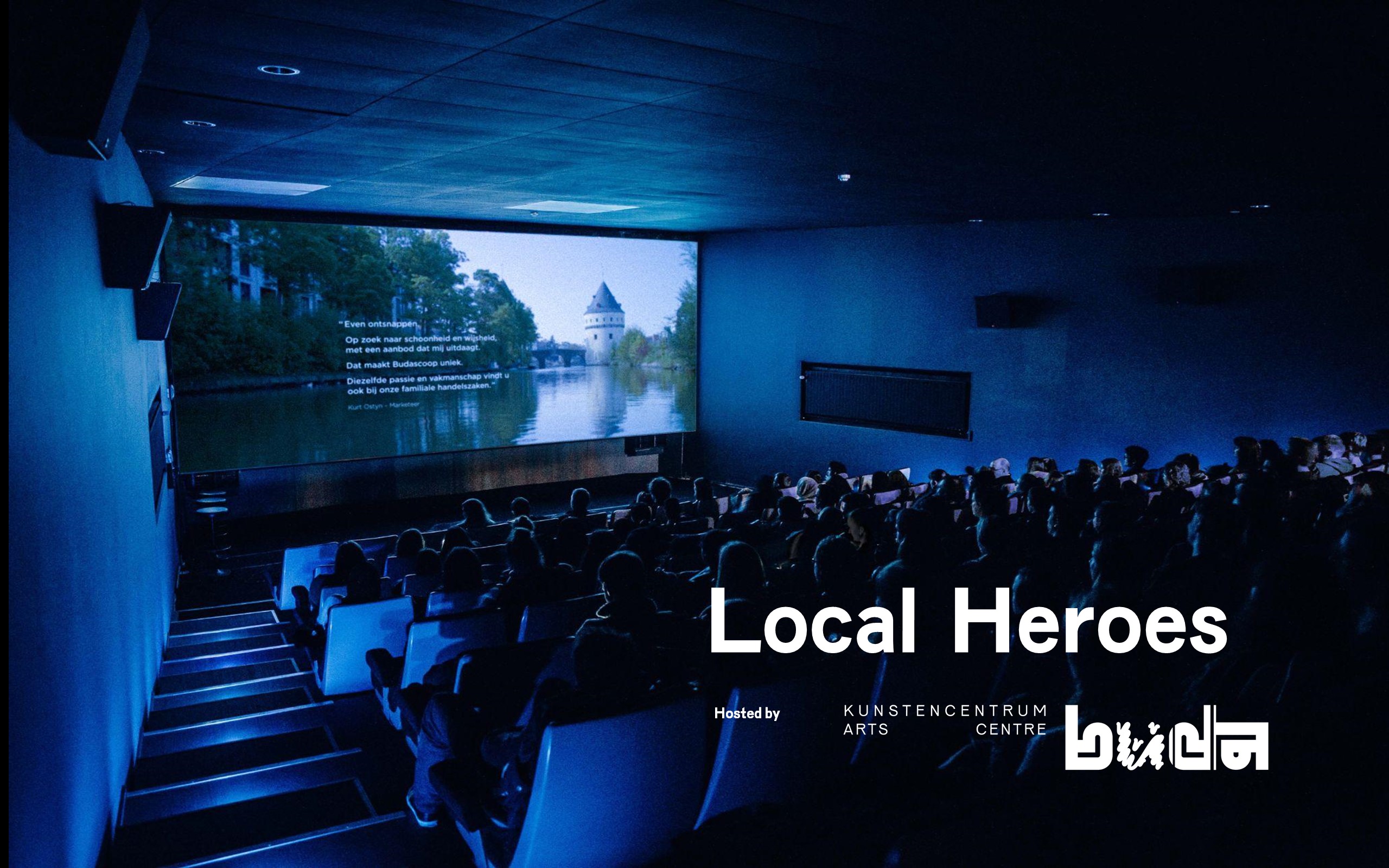
Professionele, effectieve én betaalbare schermpubliciteit in Budascoop

Jouw spot op het grote doek?

Het kan! Kunstencentrum BUDA zorgt er voor dat jouw zaak of onderneming op het grote doek komt van de succesvolle stadscinema Budascoop. Dankzij een unieke samenwerking met het lokale video- en TV-productiehuis Chemisch Circus, kunnen wij je voor een erg scherpe prijs een professionele reclamespot aanbieden.

Reclameblok in Primetime

BUDA garandeert een maximale visibiliteit door het reclameblok Local Heroes uit te zenden, net vóór de hoofdfilm start. Met andere woorden: Local Heroes wordt in ‘primetime’ uitgezonden in de 3 filmzalen van Budascoop bij alle filmvertoningen (m.u.v. school- en kinderfilms).

Impact verzekerd

Adverteren op het grote scherm in de bioscoop staat garant voor impact. Je reclamespot wordt met de grootste aandacht bekeken door mensen op zoek naar kwaliteit, de mindset van de kijker is open en positief, de omstandigheden qua geluid en beeld zijn perfect en… de videospot valt niet door te spoelen.

Een jaar lang in beeld

Je stapt in voor 1 jaar en komt dus ook een jaar lang in beeld. Je logospot (ca 4 seconden) speelt 11 maanden lang (gratis!) voor elke film. Met je focusspot (ca 35 seconden) komt je zaak veel langer in beeld. Dat is je focusmaand. Die kies je zelf. En enkel die focusmaand betaal je. Per kijker die jouw spot ziet. Je betaalt dus geen vaste fee en je hebt geen grote kosten als een film het niet goed blijkt te doen. BUDA was de eerste in Vlaanderen om deze ‘kost per view’ in te voeren.

Getuigenis

Peter Vanwynsberghe van raamdecorateur Renatex: “Voor ons is ‘Local Heroes’ een concept dat écht werkt. We zijn er heel tevreden over. Het gaat om mooie publiciteit die regelmatig terugkomt bij een gericht doelpubliek. Wij voelen telkens weer een goeie respons. Mensen komen geregeld binnen met de melding dat ze ons ontdekt hebben via Local Heroes. Wij geloven in deze formule en laten onze videospot nu al verschillende jaren met veel overtuiging hernemen.” Naast Renatex groeit het aantal regelmatige klanten: Juwelen Nys, De Nachtwacht, Alaska Group, Kaffee Damast, Elektro Taelman…

Overtuig jezelf

Bekijk hier een reclameblok van ‘Local Heroes’ als voorbeeld. Discover the logo spots for Dirkjan, Zonder Meer, Nys, Kaffee Damast and Puur Advocatuur. And take a look at the focus spots for De Nachtwacht and Renatex.

Want to know more?

Neem contact op met Paul Christiaens
Paulchristiaens@telenet.be
0496 269 069

Want to view the film programme?

cinema

feminist futures

apap – FEMINIST FUTURES

FEMINIST FUTURES is a project by the international network apap – advancing performing arts project, which currently consists of 11 European cultural organisations. In addition, 21 artists are associated with the project. FEMINIST FUTURES is co-funded by the Creative European Programme of the European Union and has an ambitious aim: to instigate powerful social change through art. The main goal of the project is to address inequality in the contemporary performing arts and to raise public awareness.

WEBSITE APAP


From 14 to 22 June 2024, we present Almost Summer, a Feminist Futures Festival. We invite you to slow down together. With performances, gigs, and engaging installations, we briefly stop time.

As we know, modernity and postmodernity have championed speed and acceleration, in particular through the invention of technological means that are supposed to make us ever more efficient, when in reality many of them are alienating us and multiplying ecological destruction. In opposition to the supposedly unalterable structural triangle that combines competition, growth and acceleration, we propose to mark a pause in ‘business as usual’.

Against the compression of the present that leads us to do more and more things in less and less time, to the point of saturation and sometimes depression, this festival is an opportunity to experiment with slowing down and gently redeploying our attention. Each of the artistic projects on offer creates in its own way a place of symbolic and sensitive resistance to acceleration. They are all invitations to “resonate”, to use the term borrowed from the philosopher Hartmut Rosa.

Discover the entire festival programme

Klaus Compagnie

Klaus Compagnie comments on everything and everyone. He does not shy away from any medium, but the drawing, whether it is made with paint, marker, charcoal or something else, forms the core of his oeuvre. He works with great enthusiasm and obsession on visualising the world according to Klaus. This from an urge to convince the viewer of his knowledge and unlimited imagination.

Time and again, current and historical facts, politicians and people from his everyday surroundings are put through the mill. They are presented to us and commented on in different, absurd proportions. Klaus uncompromisingly integrates text into every picture frame. This makes his expressive work disarming, funny and intriguing.

Set the table

OPEN CALL: SET THE TABLE

Cristina Carvalhal & Raquel André: SET THE TABLE

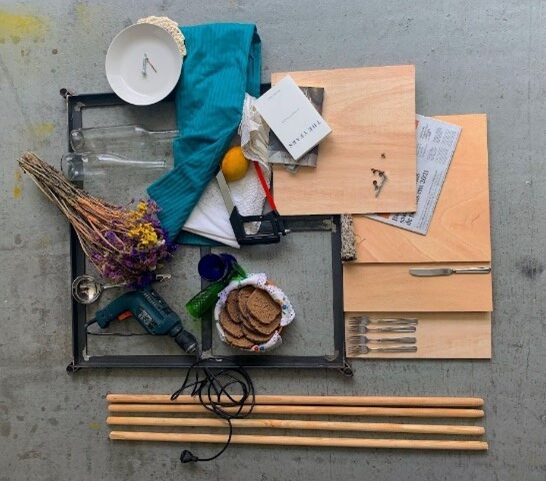
In June, Portuguese artists Cristina Carvalhal & Raquel André will be in residence at BUDA Arts Centre. Together with their team, they are working on their latest performance SET THE TABLE. A group of women come together to build a table, to set a table and to meet each other. Meanwhile, they share their stories of home, work, encounter, intimacy, power, future and many others. In this way, they would like to give different women a voice on stage. The stories featured in the performance are collected through workshops.

The group has already organised these workshops in Croatia and Portugal and will also stop in Romania before making their final stop in Kortrijk. Previous participants experienced these workshops as a strong experience and had the feeling that they got in touch with themselves in a deep way.

Some of the stories told during the workshops will be part of the theatre performance and a documentary film that will premiere in Portugal in September. The show will be performed there by professional actors and maybe you will be on stage too? This performance will also be shown in Budascoop during NEXT festival in November. Those who take part in this workshop series will be able to join us on stage in November.

Who can participate?

  • You are 18 or older and identify as a woman.
  • You are eager and open to sharing stories with a group.
  • You are available at all workshop times.

What do you need?

  • No theatre experience necessary
  • Comfortable clothing required for movement and theatre exercises
  • The language of the workshops is English, but we will provide a translator for those who do not speak (fluent) English.

When?

  • 23 to 27 june
  • 17:00 to 20:00

Getting the hang of it?

Mail to Famke at famke@buda.be or call 0471 65 76 69 to register.

In the frame of BespectACTive!

BeSpectative! creative europe logo

Almost Summer

Intro Almost Summer festival

Dance – film – performance – installation – sound walk – party – summer garden

Almost Summer celebrates the transition to a new season. Artistic proposals in various forms and media, emerging from singular sensibilities, intermingle and echo each other. We turn the spotlight on language: a mother tongue to be relearned (Muna Mussie) , one that betrays your identity and that you have to reform in order to escape the enemy (Effi & Amir) , one that invites you to dance (Calixto Neto) or to walk (Paula Diogo) . From the mouthing of new sounds to find a poetic breath (Liza Baliasnaja), to unresolved dialogues between two distinct beings (Carole Perdereau) it is silent, sometimes, to open up to other forms of communication, an assembly of organic and non-organic bodies (Sara Manente), and to learn how to care (Jija Sohn and Aleksandra Lemm). The language talks about relations between life and death in different ways: from fierce discussions that bring together surrealist and punk theatre (Inga Huld Hàkonardòttir) to speculative narration trying to reinvent the future (Fabrizio Terranova & Xavier Garcia-Bardon).

If the Almost Summer festival is an event, it carries within it a temporality that transcends it, a long time of research and formal elaborations by the artists beforehand, a time unknown of intimate and collective effects that the proposed artistic experiences will have on the spectators’ bodies. Almost Summer is also the result of collaborations with artists supported by European networks of which BUDA is a member: APAP Feminist Futures and Be SpectACTive!, which invites a group of spectators to choose and programme projects by artists in residence at BUDA in the course of the year (Castélie Yalombo) .

Almost Summer is the result of an ecosystem that was built gradually, in the adversity caused by the pandemic, yet still managed to nurture multiple collaborations, with artists but also with partners. The Budatower will host a programme devised bij Wit.h, which has been forging collaborations between artists with or without physical and mental disabilities for twenty years. They will organise numerous events: choreographies of art objects, residencies and happenings (The Crip School).

During this festival we will also welcome the group of researchers and artists Emptor, which aims to raise the question of the legal ownership of the work of art and will publicly present its reflections – a powerful question when it comes to Outsider Art.

The festival becomes a crossroad of encounters of languages, aesthetic experiences and festive moments: a sound walk, a poetic and culinary performance in the garden, dance and theater in black boxes, mapped discussions and installations, film…

Mathilde Villeneuve, artistic director arts centre BUDA

Ellen Schroven

The work of Ellen Schroven always starts from small observations, which are recorded in a medium that lends itself best to that. She makes drawings, photos, videos, texts and artist books. Being on the road and working together are also an essential part of her artistic practice.

Jan Laute

Jan Laute is an architect and makes urban interventions. In addition to his practice as an architect, he studies man’s relationship with the city as an organic fact in all its forms. Together with Lode Vranken and Pieter Hollants, he formed Dear Pigs. Dear Pigs is a Brussels collective that operates in the public space and believes in intuitive work processes. They guarantee experimentation and spontaneity.

S.P.A.C.E.

S.P.A.C.E. (Social Pedagogical Art & Creativity Exploration) is an international selection programme of VIVES University of Applied Sciences in the field of social work.

Commissioned by Wit.h and accompanied by a visual artist, the Erasmus students will work with ‘the trumpet’, a metaphor for exclaiming or giving a voice to those who have little or no voice.


Honoré d’O

Honoré d’O’s installations are compositions of everyday materials and objects made without the slightest technical pretension. He constantly introduces new objects found by chance, thus blurring the line between the everyday and the work of art. The accidental appearance of the spectator and his or her interaction with the work function as a completion of the installations. In other words, the spectator becomes part of the work. Honoré d’O’s installations are permeated by a sense of chaos situated in a web of underlying meanings and connections in which reality constantly passes into art and vice versa.

Dieter De Vlieghere

Dieter De Vlieghere heads the research and projects department of LUCA School of Arts. He previously worked as a curator at the Austrian Museum Gugging, specialising in outsider art and research projects on digital cultural heritage, among other things. Dieter De Vlieghere defends a doctorate at the Friedrich-Schiller Universität Jena on the curatorial history of outsider art.

Hildegard Devuyst

Hildegard Devuyst has in her long career as a dramaturge with Lod, KVS, les Ballets C de la B accompanied various productions in Belgium and abroad. Among other things, she also founded PASS (the Performing Arts Summer School), a long-term project with young Palestinian performing artists that I have been coordinating since 2007, in cooperation with KVS, les ballets C de la B and the A.M. Qattan Foundation in Ramallah. Since 2016, she has been part of the team of les ballets C de la B and helped shape the Festival de Marseille. From 2022, she will be fully involved in the transition of les ballets C de la B, which will merge with Cabinet k in 2023 under the new name La Geste. At La Geste, she will share the artistic direction with Joke Laureyns.

Leni Van Goidsenhoven

Leni Van Goidsenhoven studied art and literature. After her studies, she worked as Jan Hoet’s assistant. She will receive her doctorate from KU Leuven in 2017 with a dissertation on autism, the cultural industry and representation. Since 2018, she has been a postdoctoral researcher at the University of Antwerp (Philosophy) and KU Leuven (Cultural Studies). Her field of research is working with people for whom speaking is not always natural.

Piet Devos

Piet Devos is an author, translator and literary scholar. At the age of five, he became blind due to retinal cancer. These experiences of illness and disability are very important for who he is today. Piet says: “They have shaped me as a person, as a writer and researcher, but also as an activist for a greener and more inclusive world. From an early age, I was introduced to the fragility of life and the richness of different bodies and perspectives. What drives me above all else is the telling of untold or forgotten stories.”

Topo Copy

Topo Copy is an open lab research centre in Ghent for print, zines, paper, copy, ink and art … with a self-publishing label & library, activities such as workshops, lectures, interventions and exhibitions. They run an open workshop with machines for creation with ink and paper! They have been in existence since 2011.

Manuela Sagon

Manuela Sagon has been visiting the Blu Camello atelier in Livorno every day since it was founded in 1999. Her drawings are characterised by strong distortion and marks of varying thickness, often accompanied by a distinctive script. Manuela’s drawings are also often used for editorial publications, advertising and music covers. She regularly takes part in international art projects. Manuela Sagona’s graphic works are included in prestigious Art Brut collections, such as the permanent collection at the Centre Pompidou (Musée National d’Art Moderne) in Paris, donated by French collector Bruno Decharme.

Julia Krause-Harder

Julia Krause-Harder is one of the permanent artists at Atelier Goldstein. Since 2005, she has been working with due obsession on a collection of objects with the aim of imitating all the dinosaurs that could ever exist in various forms. She bases herself exclusively on found materials such as ring binders, neckties or cable ties, which leads to very unexpected and humorous feedback on our present in the thoroughly realistic representation of Kentrosaurus, Pterosaurus & Co. Atelier Goldstein in Frankfurt, to which Julia Krause-Harder belongs, is an independent artist’s studio. Since 2001, 15 artists with physical or mental disabilities have been working in the fields of painting, sculpture, graphics, photography and video. They receive individual support in the creation of their work and are placed in museums, galleries and exhibition spaces in Germany and abroad.

Dijf Sanders

Multi-instrumentalist and composer David ‘Dijf’ Sanders combines a broad mix of styles with a boundless artistic approach full of multicultural blends. The Ghent artist has always worked on different projects, collaborations or productions at the same time – lately he has been working with Warhaus, Sylvie Kreusch, Mattias De Craene’s MDC III and Wim Vandekeybus (Die Bakchen – Lasst uns tanzen), to name but a few – but that did not stop him from releasing solo records as well.

Nanou Vandecruys

Nanou Vandecruys lives and works in Geel. From 2014 to 2018 she was active at Kunsthuis Yellow. Today, she is working individually on her oeuvre. Her colourful, organic drawings constantly balance between recognisability and abstraction. They are layered images in a multitude of materials with a wealth of experimentation and a challenging playfulness. Many of her images are created while listening to music. Rhythms creep in

Mauritz Verlinden

After studying fine arts, Mauritz Verlinden exchanged paint for fabric and thread. He fully adopts the technique of embroidery and builds up his work stitch by stitch. He paints while embroidering with the brightest colours and gold thread. The slow process of embroidery allows him not to make any hasty decisions and to let the work emerge organically. His freestyle embroidery flirts between 2D and 3D, between the figurative and the abstract, but leaves no one unmoved in any case.

Irène Gérard

Irène Gérard lives and works in Vielsalm. In 2007, Irène Gérard found herself at La “S” Grand Atelier – Centre d’Art Brut et Contemporain – after having worked for many years in a custom-made workshop. She soon manifests herself as an original portraitist by the way she classifies her subjects. The bodies in her figurative work seem broken. They are like pieces that are glued back together. They are reminiscent of stained-glass windows stripped of their joints. Each work forms its own personal story.

Michiel De Jaeger

Michiel De Jaeger began his artistic career in Flanders, but it soon led him to Germany and Liège. Fascinated by the crossovers of media, colours, characteristics and influences, he works in the visual arts as well as in theatre and dance. Michiel discovered his passion for art brut at Atelier Goldstein in Frankfurt (D). He now lives in Brussels and works as a drawing and painting artist at La “S” Grand Atelier -Centre d’Art Brut et Contemporain – in Vielsalm. He also works on his individual oeuvre. He is currently working on a photo project on the theme of public space and loneliness.

Dirk Zoete

Dirk Zoete puts his imagination on stage. He presents his models of thinking about the world and people on stages and in sets that are part of his work. He directs changing scenes with a slightly absurd company of characters, animals and their attributes. In both his drawings and his spatial works, the emphasis is on the surface: the figures are flat, schematic and inhabit frontal spaces. They function as the signs in Zoete’s playful artistic language.

Dirk Geffers

Dirk Geffers lives in Braunschweig where he works in the studio Geyso20. He draws, paints, writes texts, invents names, explores sounds, proportions and perspectives. He views his surroundings with the eye of an artist-researcher. Subjects come to him and hold him captive for a long time, until he has worked through them artistically and starts something new.

Shades of green, often with a touch of turquoise, are mixed, compared, judged and commented on in comprehensive, expert monologues on colours, colour contrasts and their effect on personal sensibilities. He collects poster paper, cardboard strips, plastic packaging that comes close to the colour he wants and processes them into deciduous and coniferous trees that are assembled into forests.

Pol Coussement

Pol Coussement is artistic director, founder, choreographer and dancer of Polydans and Passerelle. Passerelle has years of experience in building bridges between contemporary dance and education. Together with professional choreographers, young people enter into an inspiring and creative dialogue. The youth acquires artistic competences that make them stronger. Agile and resilient.

Messieurs Delmotte

Messieurs Delmotte (°1967) is an artist from Liège who lives and works in Brussels. He stages situations in which he moves like a slapstick character in the public space and disrupts the order in a witty manner. His oeuvre consists of drawings, video and photographic work that can be seen at home and abroad.

Myriam Van Imschoot

Myriam Van Imschoot (°1969) is a Brussels-based performance artist who works in various media, with a strong focus on the voice. Her work expresses a warm view of everyday and collective processes and their potential for alternative imagination and transformation.

Kwint Manshoven

Kwint Manshoven (°1971) is a choreographer with a background in design. Together with Joke Laureyns, he forms Cabinet K, a company that focuses on dance performances with both professional dancers and children on stage.

radio kom.post

Radio kom.post

2022

A sensitive radio program, live from Budascoop for Almost Summer Festival 2021, made less of quotidian informations and urgencies of ‘breaking news’ than of temporal deformations and duration fiven to the repairing gestures of artistic proceesses linked with political context.

Listen to the radio programme

kom.post founded in January 2009 in Berlin is an interdisciplinary collective made up of thirty international artists and researchers. Kom.post members base their researches and actions on process, they attach less importance to the production of a collective work than to setting in motion a terrain for interrogation which activates creative “micro-groups”. As the work methods are diverse, each member is able to nourish, prolong, and counterbalance the research of another member or that of the group as a whole, following the principles which are dear to kom.post : the “exchange of knowledge” and the “reprise”, or re-take. The roles of author, contributor, and spectator are constantly exchanged, thereby maintaining the members in a continuous research on forms of creation, transmission and artistic sharing, still permitted and even more necessary in this time of imposed distances. Kom.post is nomadic and presents its creations (performances, new form of mediations, exhibition…) in various European and international events.

BUDA arts center

Participate

Compañeros

The “Compañeros” are a test audience , a group of non-professional spectators who are invited to come and watch the work of our artists in residence. Very often these are works in progress, but can sometimes be a general rehearsal or even an avant-première. In exchange, the Compañeros share their thoughts with the artist during a follow-up discussion. This can be an informal talk starting from specific questions by the artist, or a structured conversation following the DasArts feedback method.

Would you like to become a Compañero? Send an email to famke.struyve@buda.be


B-scene(rs)

Our committed spectators, who are passionate about contemporary performing arts, embark on a wonderful adventure with us. Together we decide which performances will be shown during the Almost Summer festival in June.

We send out an open call to our artists in residence, and a selection of these will present their projects. The B-scene(rs) attend all of the presentations and together choose two performances they would like to share with a larger audience.

This initiative is part of the European Be SpectACTive! Network, which aims to involve audiences in our operations.

Would you like to become part of our B-scene(rs)? Send an email to famke.struyve@buda.be


Youngsters In Performance

YIP – Youngsters In Performance – is a course offering young people a chance to explore the performance world. Together they watch and discuss performances, follow workshops and interact with artists. At the moment they are part of the European project Be SpectACTive!, which enables them to choose two performances that will be shown during our Almost Summer festival. In this way we aim to involve them in our operations, and give them a chance to have their say in our programme.

Would you like to become part of YIP? Send an email to famke.struyve@buda.be

buda's filmfonds

Will you become a Friend of BUDA?

With the new ‘Friends of BUDA Fund’, we want to structurally anchor our social actions and no longer limit them to film. By becoming a Friend of BUDA, you support our inclusive activities and help create culture for people with less.

Arts centre BUDA has for years been firmly committed to reaching people and groups with little or no access to art and culture: children and young families in poverty, young people in institutions, newcomers, un- or low-skilled people, people with disabilities….

With the donations in the film fund, BUDA realised in the past two years:

  • 2 5-day film camps during which 15 children living in poverty learned to act, edit and direct a film together, all under professional guidance;
  • 16 workshops in 8 youth institutions, 2 concentration schools and 3 neighbourhoods;
  • 12 actions and 10 guided tours for specific target groups such as Ajko, A’kzie, Group Intro, Tajo, De Kier and others.;
  • 4 ‘clear language’ leaflets for non-native speakers or newcomers;
  • 3 free film screenings for social organisations working with people in vulnerable positions;
  • 3,872 people who benefited from the UiTPAS special reduction rate (20% of the standard price).

In addition, BUDA also focused, among other things, on greater accessibility for the hearing- and visually-impaired.

In addition to a structural partner of €5,000, we are looking for 10 supporting partners of €1,000 each year and at least 100 generous culture lovers who each donate €50 (or more) to offer more to people who have less. In exchange for that donation, the King Baudouin Foundation automatically provides a tax certificate which allows you, as a generous donor, to receive 45% of your contribution back via your taxes. (So if you really want to donate €50, you better gift €100.)

Preferably, we ask companies, organisations or service clubs to sign up for 2 or 3 years to make the Fund sustainable. This way, we can not only support young people, but also develop the right tools for adults. In 2024, BUDA’s operation around inclusivity will be extended with new actions for neurodivergent people, including making visual preparation available, organising low-stimulus dance and theatre performances and the first experiments with low-stimulus cinema. For now, no Belgian cinema offers this. Let’s pioneer in this together.

Deposit your donation here or transfer your donation to the King Baudouin Foundation’s project account BE10 0000 0000 0404 with the structured message: +++623/3861/40036++++.

Together we will make arts centre BUDA a warm nest for all. Know that through your contribution, BUDA offers an ever-growing group access to art and culture for the first time. We give children and young people a ‘voice’ and self-confidence by letting them develop their own visual language in film workshops or teach them to look at the world differently and more broadly through film, theatre or dance. In time, several of these young people become workshop attendant or reception staff member themselves at BUDA.

This is a project with the support of Streekfonds West-Vlaanderen, managed by the King Baudouin Foundation.

BUDA arts centre

Applications for residencies

Arts Centre BUDA uses its YES team, know-how and infrastructure to support creations in the performing arts. We host an average of about 70 residencies a year – from full technical residencies in the theatres at Budascoop to studio work or research residencies in Budatoren.

The basic conditions BUDA provides to all residencies are: the use of the studio, accommodation for the team and lunches during weekdays.

Toolbox for residencies

Applications for residencies can be done via residency@budakortrijk.be
Applications may be submitted in Dutch, French or English.

If possible, answer following questions in your application:

  • A short description of the project – few lines to max one page will do fine.
  • Brief information about your artistic practice and previous projects, video links are welcome (max 1 page)
  • How can BUDA support your project?
  • What is your ideal timing? Preferably also give a number of alternative periods.
  • What kind of space are you looking for?
  • How many people are involved and for how many people do you need accommodation?

Applications will be treated approximately one year ahead, and in general we book in following four rounds:
deadline 15 August 2026 for residencies in September & October 2027 (not in November)
deadline 1 December 2026 for residencies in December 2027 / January / February 2028
deadline 15 February 2027 for residencies in March / April / May 2028

Last minute requests for studio-space – up to three to four weeks in advance – are sometimes possible and will be tried and fitted in whenever possible. Please contact residency@budakortrijk.be. Please include the following info in the application:

  • The dates for which you are looking for studio space
  • What kind of studio you are looking for
  • How many employees are in the project and whether studio space without lodging is an option.

The artistic directors of BUDA invite an external jury member for each selection round (Barbara Coffy, Krystel Khoury, Julia Reist, Luanda Casella, Amin Srara, Yasen Vasilev…). In our residency programme, we watch over the diversity of artists and performing arts. Due to a high volume of applications, BUDA cannot provide individual feedback explaining the reason an application was not selected.

BUDA’s toolbox for residents (rooms and studios, technical support, …) can be found here.

budatoren

Toolbox for residents

Arts Centre BUDA uses its YES team, know-how and infrastructure to support creations in the performing arts. We host an average of about 70 residencies a year – from full technical residencies in the theatres at Budascoop to studio work or research residencies in Budatoren.

Are you looking for a rehearsal studio? Or would you like to work in a corporation, a school, or the public space? You would prefer a content residency to dive deeper into content related research? Or would like to discuss the possibility of a publishing residency? You want to come and work on the conditions of art production? Or focus on the documentation of previous pieces? We are happy to discuss your question and evaluate together with you if BUDA could help you realise this proposal.

The basic conditions BUDA provides to all residencies are: the use of the studio, accommodation for the team, lunches during week days.

Apply for residency

SPACES

In general, residencies take place in the theatres of Budascoop and in the rehearsal studios of Budatoren.

THEATRE HALLS

BUDASCOOP, HALL 1 (BS1)

plan 1 | plan 2

Budascoop – hall1 (BS1) is primarily a presentation place for theater, dance and performance during festivals and regular screenings, but is also regularly used as a creation place for larger projects – fixed tribune with 270 seats

BUDASCOOP, HALL 2 (BS2)

plan 1 | plan 2

Budascoop – hall 2 (BS2) is mainly used for residencies – flexible tribune

STUDIOS IN BUDATOREN

BUDATOREN, STUDIO 0 (BT0)

ground floor | dimensions: L 17m x W 8.5m x H 4.4m
concrete floor | basic hanging options | large windows on the side giving out onto the garden, can be used for loading and unloading.

BUDATOREN, STUDIO 1 (BT1)

first Floor | Dimensions: L 17m x W 8m x H 4m
wooden dance floor | basic grind – few technical possibilities | can be completely darkened

BUDATOREN, STUDIO 3 (BT3)

third floor | dimensions: L 13m x W 8m x H 3m
wooden dance parquet | no technical possibilities

BUDATOREN, STUDIO 4 (BT4)

fourth floor | dimensions: L 10m x W 8,5m x H 3,3m
wooden dance parquet | no technical possibilities

BUDATOREN, STUDIO 5 (BT5)

fifth floor | dimensions: L 10m x W 8,5m x H 4,9m
wooden dance parquet | no technical possibilities.


RESIDENCY HOUSES

There are two residence houses with shared kitchen and bathrooms. Lodging in residence houses is a part of the residency, and often a decisive argument in setting the residency calendar: we want to make the best use of available opportunities.


LUNCH

Each afternoon we provide a free vegetarian lunch for residents. It usually consists of soup with bread and spread.


POSSIBILITIES IN TECHNICAL ASSISTANCE

  • Technical support at set-up and during the residency, including use of technical infrastructure and resources.
  • The construction of (modest) scenography and objects – with know-how of:
    • theatre-mechanics: knots ropes and pulleys
    • electronics
    • metal- and woodworks
    • knowhow, research and advice in technical purchases and rentals.
    • a network of bigger and smaller manufacturers of technical gears
  • Adaptations in and customising tech purchases.
  • Assist in designing and drawing a lightplot.
  • Expertise in setting – multi-media (exhibitions) and location projects.
  • Converting video to cinema-projection.
  • Expertise in (research for) manufacturers of (non-technical) materials.
  • Drawing and writing a technical rider.

OTHER EXPERTISES

  • Thematic filmresearch and suggestions
  • Advice and assist in writing applications
  • Advice and assist in drawing a budget for projects
  • Broad network (substantive and organisational links) of partners, organisations and administrations in city and (EU) region
  • Content-talks and reflection

SHOWINGS & COMPANEROS

Arts centre BUDA has gained experience in hosting showings of work in progress, genuine dress rehearsals or avant-premières. These (informal) showings are a “tool” we offer, and therefore not mandatory. The artist determines IF and HOW something is presented as a function of the creative process.

The “compañeros” are BUDA’s test audience: a group of non-professional spectators who have since become practiced at giving feedback after showings. The artist decides what type of discussion will follow; an informal chat at the bar, a classic Q&A (whether or not based on predetermined questions) or a structured DAS Arts feedback session.


APPLICATIONS

Apply for residency

cubo

CUBO

Culture builder: (de; m/f/x; mv: culture builder) smart person who, for 20 euros a month, enjoys plenty of film, theater, dance, performance and music at Schouwburg Kortrijk and arts centre BUDA.

I BECOME CUBO

What can you experience with CUBO?

You can easily recognize participating offerings by the CUBO logo.

Formules

  • For 20 euros a month, you can reserve one seat per screening or movie.
  • For 40 euros a month you can reserve two connecting seats per screening or movie; one for yourself and for your regular culture buddy.

CUBO subscriptions are strictly personal and cannot be transferred.

How it works

  • Members can join online, by phone (056 23 98 55) or at the Ticketservice desk (Conservatoriumplein 1, Kortrijk)
  • Through a direct debit order, the correct amount goes out of your account
  • We create a UiTPAS for you free of charge and link it to your CUBO subscription
  • After activation, you can reserve your spot(s)
  • Tickets can be ordered online, by phone (Schouwburg Kortrijk only) or at the front desk of Ticketservice Kortrijk.

GENERAL CUBO TERMS AND CONDITIONS

How do I book my CUBO tickets

BUDA arts centre

  • Select your ticket at CUBO rate on the arts center BUDA website
  • Or book at the film box office on the day.

Schouwburg Kortrijk

  • Log in to the Theatre website (top right via ‘Login’) and then select your ticket at CUBO rate at the desired performance.
  • Only the applicant of the CUBO DUO subscription can book online for both persons
  • Booking tickets for multiple CUBO members? You can do so by phone or at the Ticketservice desk.

Always bring your UiTPAS and ID card to the performance for verification.

As a CUBO member, you automatically co-invest in DURF 2030!

  • You will facilitate local experiments that work on concrete creative solutions to current challenges around work, mental well-being, care and nature,…
  • You help give all these daredevils the means to realize impact projects and in doing so, you help build a resilient, creative region.
  • You give Kortrijk that push to experiment with social change.

NEWS ABOUT DURF2030

Give CUBO as a gift

Looking for the ideal gift? Give CUBO as a gift! Moreover, with this gift you support creative cultural projects in Kortrijk. You can give a gift voucher of 6 months. You can order the CUBO gift voucher below. After payment you will immediately receive the voucher in your mailbox. You can also pick up the gift voucher at Ticketservice Kortrijk (Conservatoriumplein 1) during opening hours.

GIVE CUBO AS A PRESENT

I BECOME CUBO